.png)
Effective Weed Control Techniques for Landscapes on Vancouver Island

Updated: Mar 23
For property managers on Vancouver Island, weed control is either a predictable line item or a budget drain. The difference is whether you're managing site conditions or just reacting to symptoms.
Most weed control advice focuses on killing weeds. That's backwards. The properties we work with spend less time on weed control each year because we design landscapes that make weeds irrelevant.
Weeds are not just an aesthetic nuisance. On Vancouver Island, they are a maintenance multiplier. Wet winters, fast spring growth, and disturbed soils create ideal conditions for weeds to establish, spread, and outcompete the plants you actually want. Left unchecked, weeds can trap moisture, interfere with drainage, create slip hazards that increase liability exposure, hide trip hazards, generate tenant complaints that consume management time, and drive up labour costs through constant rework.
This post breaks down practical, site-specific weed control techniques that work in the South Island climate—from Victoria to Saanich to Langford—with an emphasis on durability, safety, and long-term results.
Why Weed Pressure Is Different on Vancouver Island
Vancouver Island landscapes deal with a predictable pattern: saturated soils through winter, explosive growth in spring, then dry stress in summer. That swing matters.
Wet season weeds thrive where soil stays damp, compacted, or poorly drained.
Shoulder seasons create "germination windows" where bare soil becomes a seedbed.
Summer dryness rewards landscapes with mulch, groundcover density, and irrigation discipline.
The most aggressive species we see on commercial properties—Himalayan blackberry, English ivy, horsetail, and creeping buttercup—all exploit these seasonal patterns.
The best weed control plans are not one tactic. They are a system: reduce opportunities for weeds to start, and respond quickly when they do.
Start With the Root Cause: Soil, Drainage, Disturbance
Here's what doesn't work: reactive maintenance. Sending crews out to trim weeds every two weeks is expensive theater. You're treating symptoms while the site conditions keep manufacturing the problem.
Weeds love the same conditions that cause other landscape problems: standing moisture, bare soil, and ongoing disturbance.
If you want fewer weeds next season, focus on:
Drainage performance: reduce persistently wet zones where invasive species thrive.
Soil structure: avoid over-tilling and compaction that creates weak planting conditions.
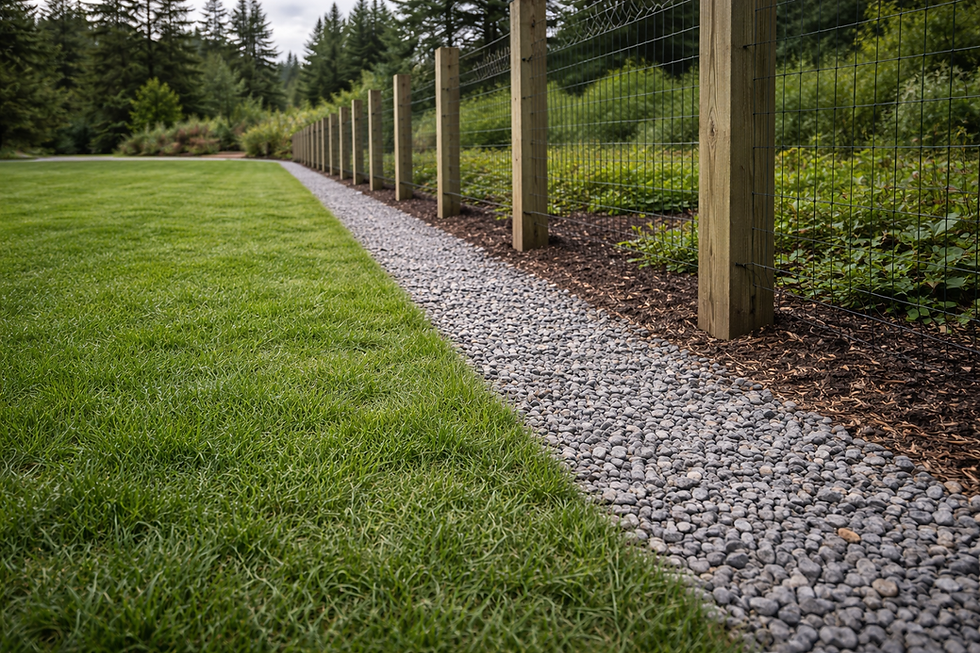
Clean edges and grades: weeds establish fastest where turf, beds, and gravel meet poorly.
A simple example: a garden bed that stays damp at the base of a slope will grow weeds aggressively because the soil is constantly recharged with runoff. Fixing drainage and grading often reduces weed pressure more than any product ever will.
Mechanical Weed Control That Actually Holds Up
Mechanical methods are usually the safest starting point for schools, parks, and high-traffic properties. They can be planned, repeated, and controlled without introducing chemical risk.
1) Mulch, Done Properly
Mulch works when it is thick enough and maintained.
Apply 50–75 mm (2–3 inches) of quality bark mulch.
Keep mulch off plant crowns and away from tree trunks.
Re-top lightly each year rather than letting it break down into composted "weed soil."
Mulch suppresses light, reduces germination, and stabilizes soil moisture. It also protects beds from erosion during winter rains.
Image idea/caption: "Mulch layer suppressing weeds and stabilizing moisture in a planting bed."
2) Hand Removal With the Right Timing
Hand pulling is most effective when weeds are young and soil is moist (classic Vancouver Island shoulder-season advantage). The goal is to remove roots before weeds seed.
Prioritize seed-producing weeds first.
Pull after rain, then close the soil (light tamping or mulch) so you're not leaving a fresh seedbed.
3) Weed Whacking and Brush Cutting
Weed whacking (string trimming) is a control method, not a cure. It works best as part of a schedule that prevents weeds from flowering and seeding.
Use it for:
fence lines and hard-to-reach edges
roadside margins and rough zones
clearing vegetation near drainage swales and inlets
Best practice: trim before weeds seed, then follow with mulch, edge control, or groundcover to reduce regrowth.

Cultural Practices: The Quiet Work That Wins Long-Term
Cultural control is the "make weeds unemployed" strategy.
Dense Planting and Groundcovers
Bare soil is an invitation. Dense planting reduces open space and shades out seedlings.
Great South Island-friendly choices include low-maintenance groundcovers and native-adapted plants that handle winter moisture and summer dry periods.
Irrigation Discipline
Overwatering does two things: it encourages weeds and weakens plants.
water deeply, less often
avoid overspray onto gravel margins and hard edges
zone irrigation by plant needs, not convenience
The more consistent the plant health, the less opportunity weeds have.
Chemical Control, With a Compliance-First Lens
Chemical control can be a tool, but it should be the last lever, not the first one, especially on institutional and public-facing sites.
If herbicides are considered:
follow BC regulations and site-specific policies
use spot treatments, not broad applications
time applications for young, actively growing weeds
protect drains, waterways, and adjacent plantings from drift and runoff
For many schools and municipalities, the practical reality is limited or no herbicide use. That makes the mechanical + cultural system even more important.
A Simple Weed Management Plan That Works
Here's the repeatable approach that keeps weed control from becoming a constant fight:
Assess the site: weed types, moisture zones, disturbance areas, drainage weak points
Prioritize prevention: mulch depth, edge integrity, planting density, irrigation control
Schedule intervention: early spring pull, mid-spring trim, summer touch-ups, fall reset
Reduce seed spread: never let problem weeds go to seed
Review each season: what areas keep failing and why?
Weed control becomes easier when the landscape is built to resist it.
Free Site Assessment: What's Actually Causing Your Weed Problem
ost recurring weed issues trace back to 2-3 fixable site conditions. We offer a complimentary 30-minute walkthrough to identify your specific pressure points—drainage zones, edge failures, soil compaction—and outline what a durable solution would look like.
If your site is dealing with recurring weed pressure, especially around drainage zones, gravel margins, or newly disturbed areas, the fix is usually a combination of site conditions + maintenance design, not just more trimming.
A site-specific plan can reduce weed workload, improve drainage performance, and protect the durability of your landscape over time.
Comments