.png)
Effective School Landscaping Principles

Updated: Apr 15
Designing outdoor spaces for schools involves more than aesthetics. It requires a practical approach that balances safety, functionality, and long-term durability. Well-planned school landscapes support daily activity, improve accessibility, and reduce maintenance headaches, especially in the wet-season realities of Greater Victoria and Vancouver Island.
Understanding Site Conditions and Drainage
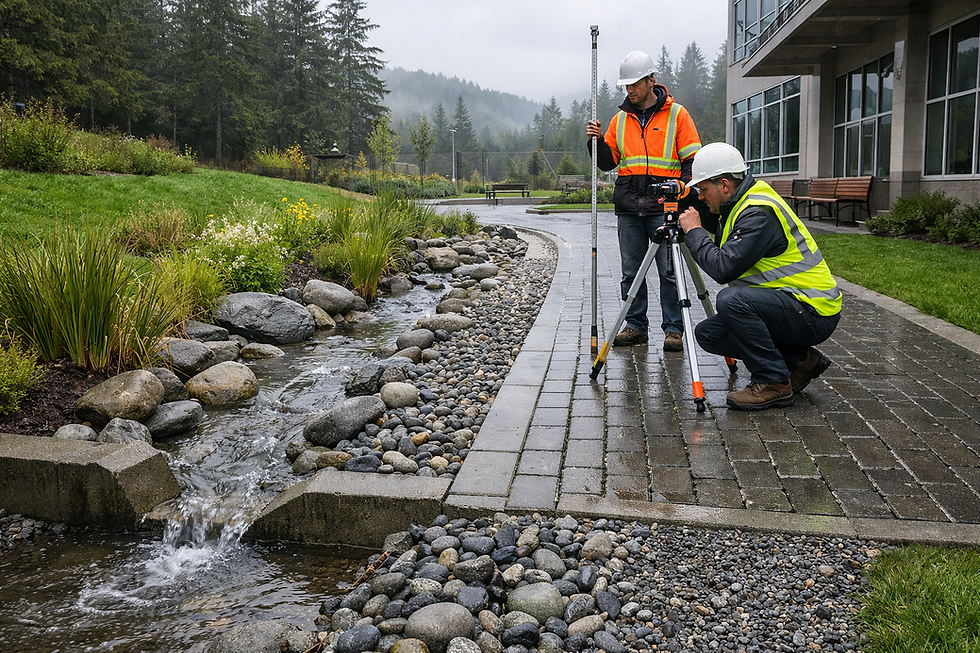
One of the first challenges in school landscaping is managing drainage. Poor drainage can lead to water pooling, soil erosion, and premature wear on hardscape and play surfaces. Those issues quickly become safety concerns and budget drains.
A strong starting point is a site assessment that looks at:
natural water flow patterns
soil type and permeability
low spots and runoff concentration points
slopes, compaction, and existing infrastructure
From there, proven tools like swales, permeable paving, rain gardens (bioswales), and subsurface drainage can direct water away from play areas and building edges. A common school scenario in Victoria is ponding at playground transitions or along path edges, where modest regrading and drainage improvements can significantly reduce downtime and repair cycles.

Key School Landscaping Principles for Safety and Accessibility
School sites have zero tolerance for preventable hazards. Good design supports clear movement, visibility, and durable surfaces that behave in wet weather.
Practical principles include:
clear sightlines near entrances and primary routes
non-slip surfaces in high traffic zones
accessible grades for ramps and pathways
consistent lighting for winter mornings and afternoons
durable edges to reduce trip points and erosion
Instead of “after-the-fact fixes,” accessibility and slip resistance should be baked into the plan from day one. Material selection matters: the wrong surface in a wet climate can become a liability.
Integrating Functional and Educational Elements
Schools benefit when landscapes do more than look nice. They can serve as outdoor classrooms, learning gardens, and community gathering areas.
High-value elements often include:
flexible open areas for changing programming
raised garden beds for hands-on learning
seating and covered zones for outdoor study
planting designed for year-round structure and low upkeep
On Vancouver Island, native and climate-fit plant choices reduce irrigation demand while supporting biodiversity. When educational features are designed for durability and maintenance access, they become assets instead of “nice ideas that fade.”

Balancing Aesthetics with Long-Term Durability
Visual appeal should never come at the expense of resilience. For school sites, the goal is performance over time.
Smart durability choices include:
native or drought-tolerant plant palettes
materials selected for wet-season traction and longevity
designs that handle seasonal changes without becoming messy or unsafe
details that protect edges, transitions, and high-use zones
A simple rule: if a detail can’t survive heavy use, wet winters, and limited maintenance windows, it doesn’t belong on a school site.
Planning for Reliable Project Schedules and Budgets
School projects often run under tight windows, and delays can disrupt operations. Reliable scheduling depends on anticipating constraints early:
confirm utilities and site access up front
sequence work around weather and school calendar realities
select materials with dependable lead times
budget for contingencies, especially drainage and subgrade
Prioritize core infrastructure first: drainage, access, safety surfaces, and durable circulation routes. The “pretty stuff” comes second, not because it’s unimportant, but because foundations decide whether the site performs.
Moving Forward with Your School Landscape Project
Effective school landscaping in Victoria and across Vancouver Island depends on practical design decisions: drainage that performs, surfaces that stay safe in wet weather, and spaces that support learning and daily use.
If you’re planning upgrades or starting fresh, Veenstra Consulting can help assess site conditions and outline practical options that fit real constraints and long-term performance goals..

Comments