.png)
Enhancing Landscaping Projects for Maximum Impact on Vancouver Island

Updated: Apr 15
Practical landscaping project tips for better drainage, cleaner builds, and longer-lasting results.
Most landscaping projects don’t fail because the vision was bad. They fail because the site reality was ignored. On Vancouver Island, that reality usually shows up as wet-season drainage, inconsistent soils, slope constraints, access challenges, and schedules that get bullied by weather and material lead times.
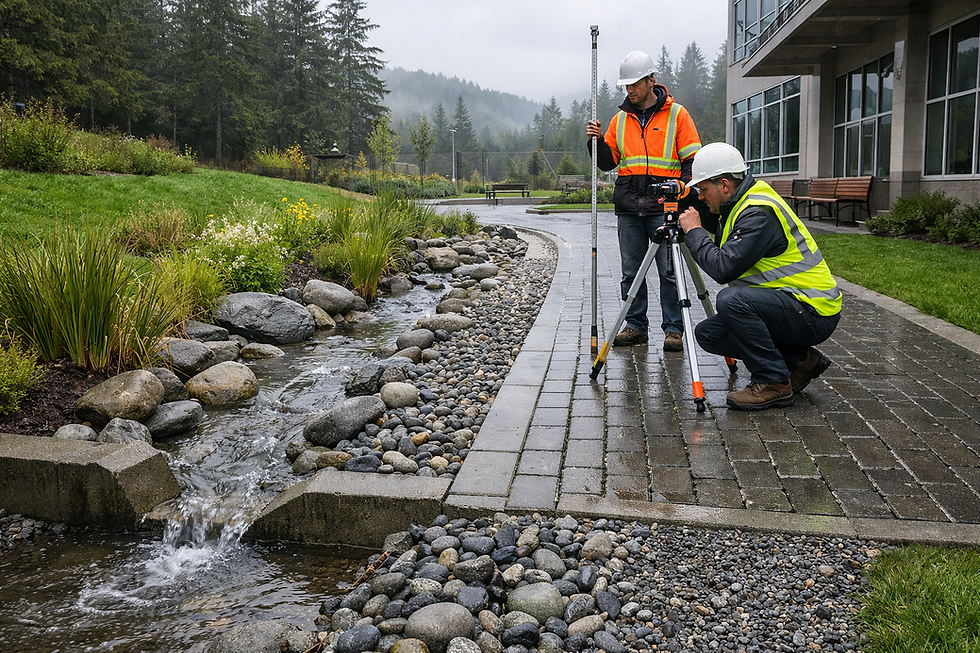
This post is a practical set of landscaping project tips we use to help clients avoid rework, protect durability, and keep projects moving. If you want fewer surprises and cleaner finishes, start with how water moves across the site.
Most rework we see on South Island projects comes from one of three misses: runoff paths ignored, base prep rushed, or edges that can’t hold grade.
Start With Site Reality (Before You Pick Materials)
Before drawings, materials, or plant lists, you need a clear read on what the site is going to do when it rains, freezes, or gets walked on 500 times a day.
Key conditions to assess early:
Soil type and compaction (clay holds water, sandy drains fast, disturbed soils shift)
Slope and runoff paths (where water is coming from and where it wants to go)
Low spots and pooling zones (often near foundations, walkways, and bed edges)
Existing vegetation and roots (what stays, what goes, what’s protected)
Access and staging space (where materials, machines, and spoil can realistically go)
On many Vancouver Island sites, one small grading issue can create a permanent “wet corner” that turns into weeds, mud, moss, and complaints.
Actionable tip: Do a basic drainage walk during or right after rainfall. If water is sitting or flowing across surfaces you plan to use, design needs to respond.

Drainage Isn’t a Feature. It’s the Foundation.
Most landscape problems are just water problems wearing disguises.
If the site doesn’t drain properly, you get:
pooling and slippery surfaces
erosion and washouts
shifting pavers and cracked edges
stressed plants and root rot
accelerated weed pressure
Practical drainage-friendly elements include:
Swales and shallow grading adjustments to direct runoff
Permeable paving where infiltration makes sense
Gravel bases with geotextile for paths and utility zones
Catch basins or subsurface drains in persistently wet areas
Deep-rooted plantings to stabilize soil and improve absorption
If drainage isn’t designed first, everything else becomes a maintenance plan.
Example tip: A gravel pathway with proper base prep, geotextile, and a slight crown will outlast a “quick install” by years.
Choose Materials That Won’t Fail in Wet Season
“Looks good” is not a performance standard.
On Vancouver Island, materials need to handle:
prolonged moisture
freeze-thaw cycles in cold snaps
high traffic (schools, strata, municipal pathways)
seasonal maintenance realities
Good decision-making questions:
Will this surface stay safe when wet?
Will this edge hold when soils soften?
Does this material encourage or fight moss, weeds, and staining?
Can the site team maintain it without special tools?
Material tip: Use non-slip surfaces and clear transitions where people walk. That’s where safety and longevity get tested.
Design So Maintenance Doesn’t Become a Problem
Durability isn’t only about strong materials. It’s also about reducing the ways a landscape can fail over time.
Design choices that quietly win:
grouping plants by water needs (easier irrigation management)
keeping mulch depth consistent in beds (reduces weeds and moisture swings)
clear bed edges that are easy to maintain
access paths to irrigation controls and utilities
avoiding “awkward strips” where trimming becomes constant
Practical design tip: If a space requires detailed handwork every two weeks to stay tidy, it’s not low-maintenance. It’s a future invoice.
Visual Impact Comes From Structure and Flow
Great landscapes don’t feel busy. They feel intentional.
High-impact, functional elements include:
pathways that naturally guide movement
seating placed where people actually stop
layered planting (groundcover, shrubs, small trees) for depth
lighting that improves safety and highlights focal points
retaining and edging that looks clean and holds grade
Visual tip: Use plant texture and height changes to create depth without overplanting. Simpler often reads “premium.”

Next Step
If your project is in the planning phase, the highest ROI move is getting the site conditions and drainage plan right before construction begins. That’s where most “surprise costs” are born, and where durable projects are made.
Ready to build it once and build it right? Schedule your assessment today.

Comments